

Juvelook in Korea: Cost, Benefits, Recovery, and What to Expect (2026 Guide)
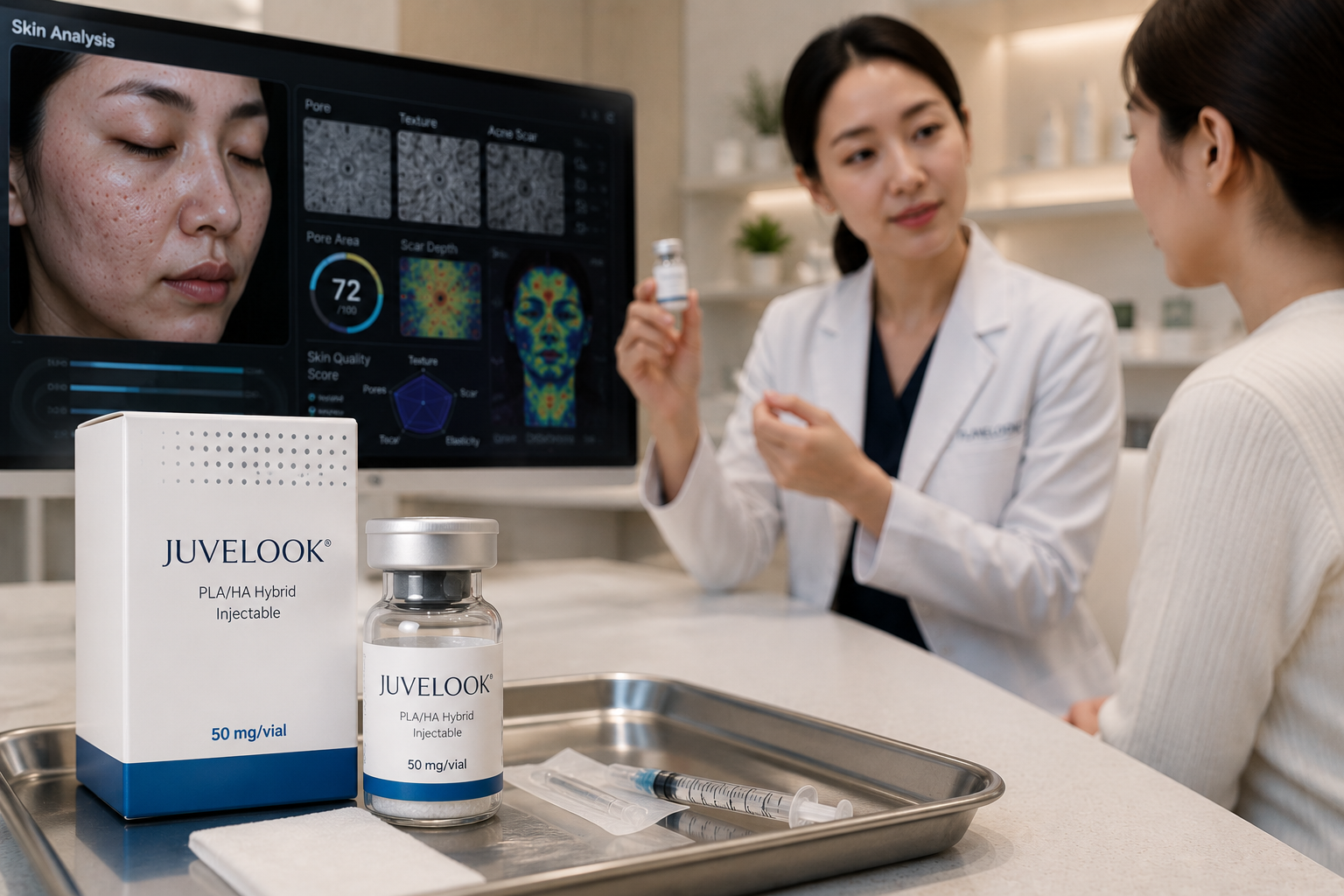
Juvelook has quickly become one of Korea's most popular collagen-stimulating injectable treatments. Many patients choose it to improve skin texture, address acne scars, reduce the appearance of enlarged pores, and support long-term skin quality improvements.
If you're considering Juvelook in Korea, this guide explains how the treatment works, who it may be suitable for, expected recovery, costs, risks, and how to choose a clinic.
What Is Juvelook?
Juvelook is a hybrid injectable treatment that combines:
- Poly D,L-lactic acid (PDLLA)
- Hyaluronic acid (HA)
The treatment is designed to provide immediate hydration from hyaluronic acid while supporting longer-term collagen production through PDLLA particles.
Unlike traditional dermal fillers, Juvelook is generally used to improve skin quality and texture rather than add significant facial volume.
Because of its collagen-stimulating properties, Juvelook is often used as part of skin rejuvenation and acne scar treatment plans.
How Does Juvelook Work?
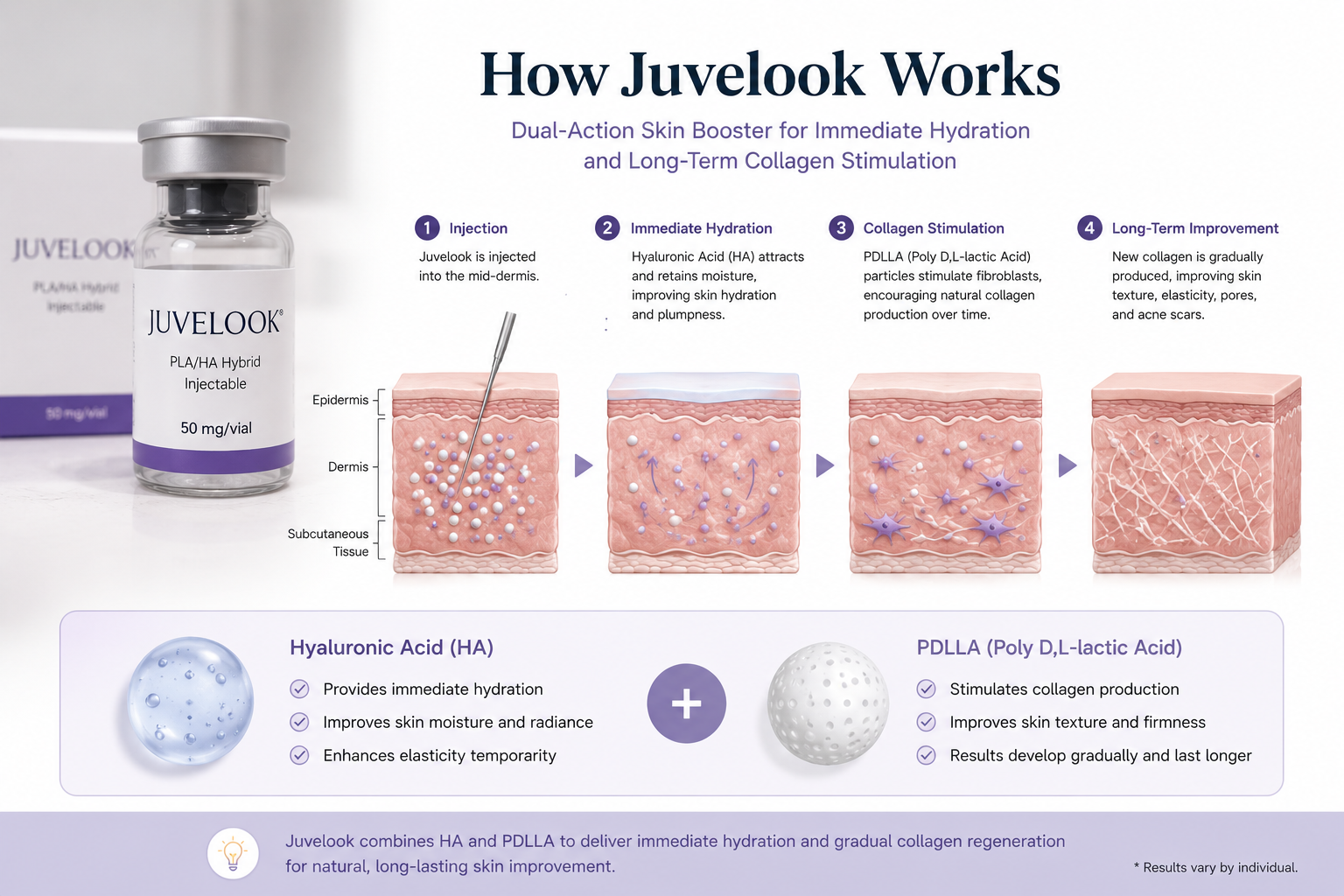
Juvelook works through two primary components.
Hyaluronic Acid
The hyaluronic acid component helps attract and retain moisture within the skin, providing hydration and temporary improvement in skin appearance.
PDLLA
PDLLA particles are intended to gradually stimulate collagen production over time.
As collagen remodeling occurs, patients may notice gradual improvements in:
- Skin texture
- Elasticity
- Acne scars
- Enlarged pores
- Overall skin quality
Results typically develop progressively rather than immediately.
Who Is Juvelook Suitable For?
Juvelook may be considered by patients who want to address:
- Acne scars
- Enlarged pores
- Uneven skin texture
- Early signs of aging
- Reduced skin elasticity
- Dull skin quality
It is often selected by patients seeking gradual, natural-looking skin improvements.
Common Juvelook Treatment Areas
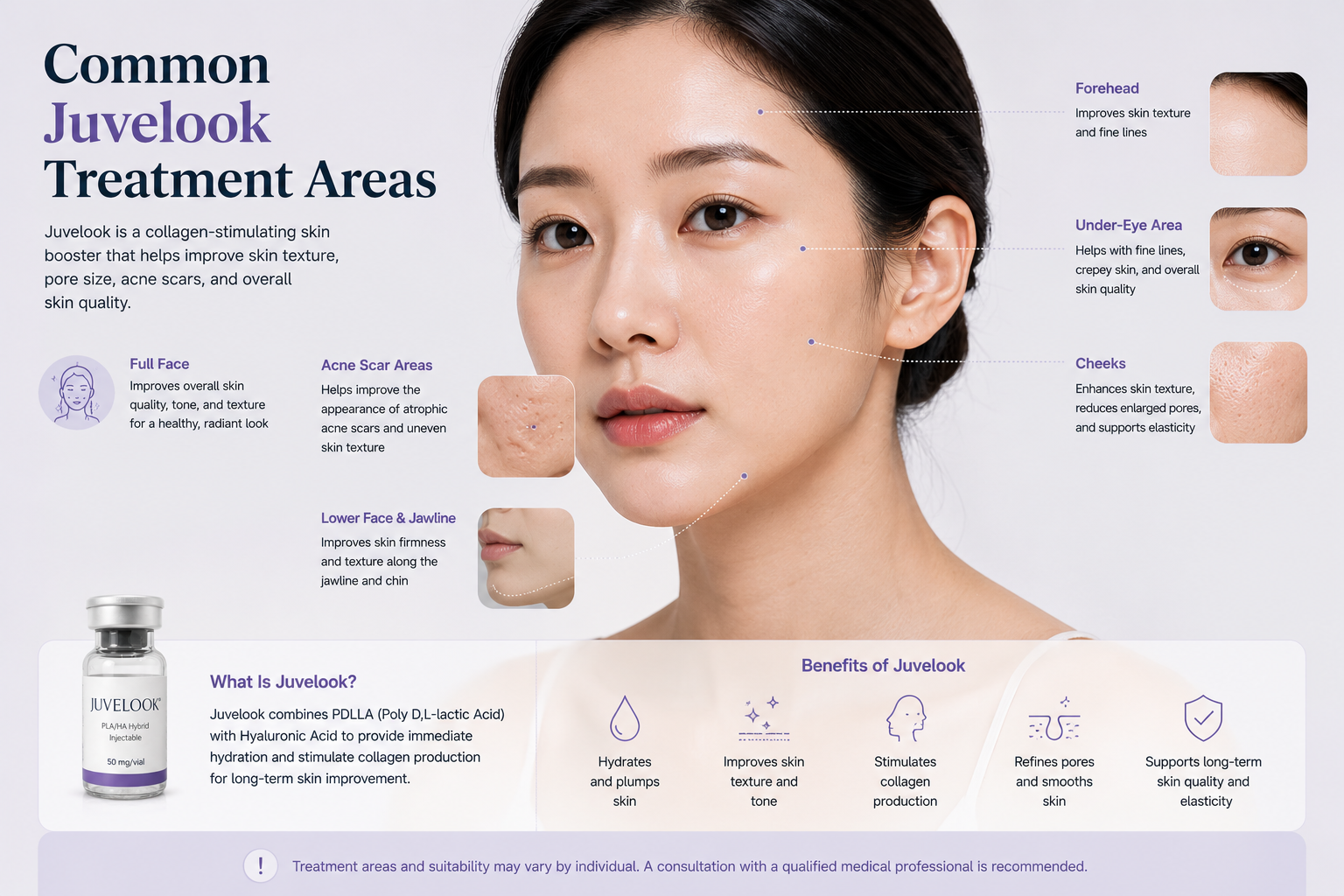
Full Face
Many patients receive Juvelook throughout the face to improve overall skin quality and texture.
Acne Scar Areas
Juvelook is frequently incorporated into acne scar treatment plans, particularly for atrophic scars.
Cheeks
The treatment may be used to improve texture and support collagen production in the cheek area.
Under-Eye Area
Certain formulations and injection techniques may be used around the eyes to address fine lines and skin quality concerns.
Treatment suitability depends on individual anatomy and provider assessment.
Types of Juvelook Available
Juvelook
The standard formulation commonly used for facial rejuvenation, pores, and acne scar concerns.
Juvelook Volume
A formulation designed for patients seeking greater structural support and collagen stimulation.
Not every clinic offers both products, so patients should confirm availability during consultation.
How Many Sessions Are Usually Recommended?
Treatment plans vary based on individual goals and skin condition.
Many providers recommend:
- An initial series of 3 sessions
- Treatments spaced several weeks apart
- Maintenance treatments if desired
The appropriate treatment schedule should be determined by a qualified medical professional.
What Is Recovery Like?
Recovery is generally mild.
Common temporary side effects include:
- Redness
- Swelling
- Bruising
- Tenderness
- Small injection bumps
Most visible signs improve within several days, although individual recovery experiences vary.
Patients can often return to normal daily activities relatively quickly.
Juvelook Cost in Korea
Pricing varies depending on:
- Clinic location
- Practitioner experience
- Product quantity used
- Treatment area
- Whether combination treatments are included
As a general guideline, Juvelook treatments in Korea commonly range from:
400,000–1,200,000 KRW per session
Comprehensive acne scar treatment plans or larger treatment areas may increase costs.
Patients should always verify:
- Product authenticity
- Treatment quantity
- Consultation fees
- Additional treatment costs
Juvelook vs Rejuran
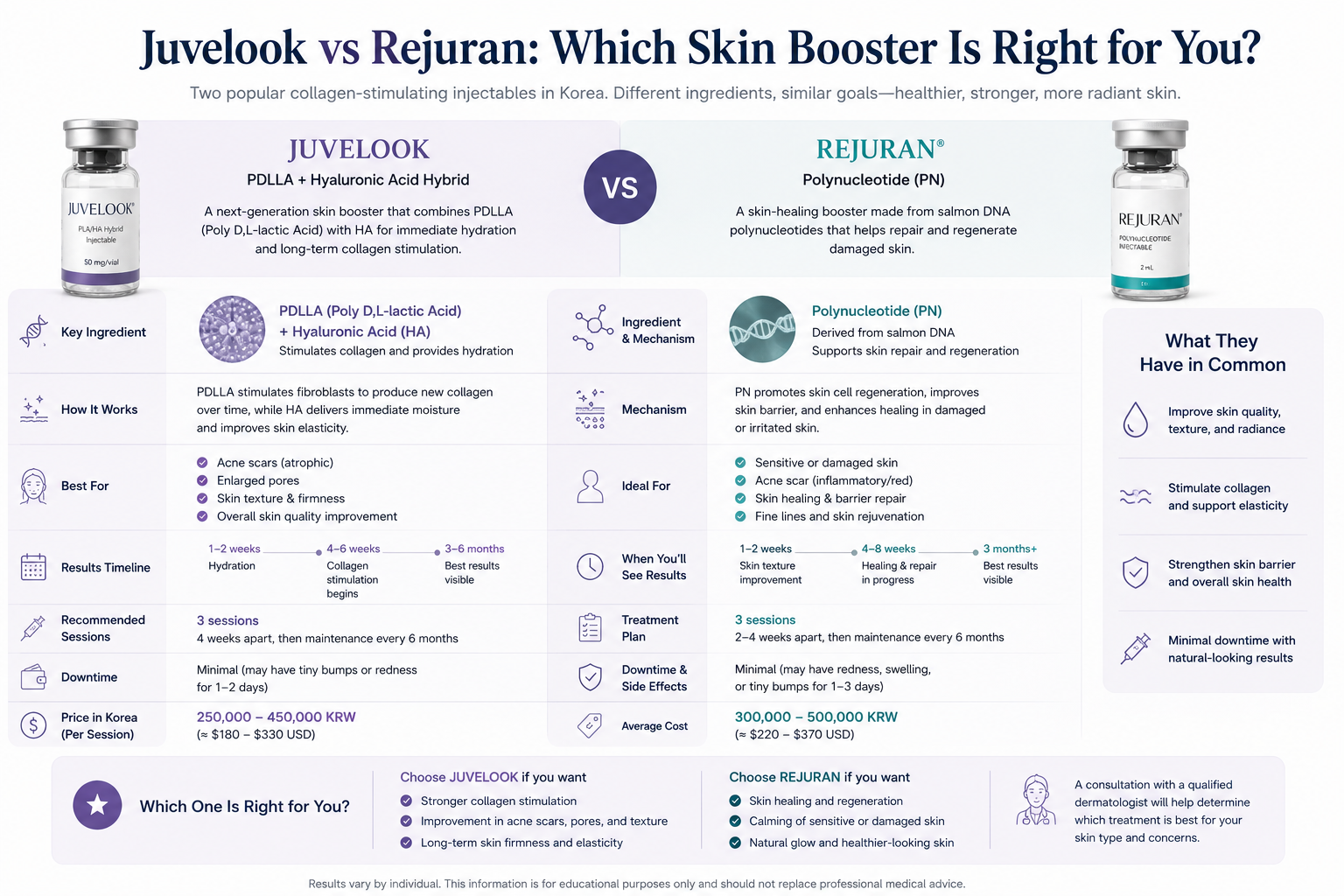
Juvelook and Rejuran are often compared because both are used to improve skin quality.
Juvelook
Often selected for:
- Acne scars
- Enlarged pores
- Collagen stimulation
- Long-term texture improvement
Rejuran
Often selected for:
- Skin repair support
- Skin quality improvement
- Hydration
- Fine lines
- Overall rejuvenation
Neither treatment is universally better. The most appropriate option depends on a patient's concerns, goals, and provider recommendations.
Potential Risks and Side Effects
Like all injectable procedures, Juvelook carries risks.
Possible side effects include:
- Redness
- Swelling
- Bruising
- Tenderness
- Temporary nodules or bumps
Although uncommon, more serious complications can occur with injectable treatments.
Patients should discuss risks, benefits, and alternatives with their provider before treatment.
How to Choose a Juvelook Clinic in Korea
When comparing clinics, consider:
Experience With Juvelook
Ask how frequently the clinic performs Juvelook treatments and whether it is commonly used for concerns similar to yours.
Medical Consultation Quality
A good consultation should include:
- Treatment suitability
- Expected outcomes
- Recovery expectations
- Potential risks
- Alternative treatment options
Experience Treating International Patients
International-friendly clinics often provide:
- English-speaking coordinators
- Transparent pricing
- Follow-up support
- Assistance with treatment planning
Product Authenticity
Patients should verify that genuine products are being used.
Questions to Ask Before Booking
- Which Juvelook product will be used?
- How many sessions are recommended?
- What results are realistic?
- How much product will be injected?
- What recovery should I expect?
- What are the total costs?
- Are there alternative treatments that may better fit my goals?
Final Thoughts
Juvelook has become increasingly popular in Korea because it combines hydration with collagen-stimulating properties that may help improve skin quality over time.
Many patients choose Juvelook for concerns such as acne scars, enlarged pores, and uneven texture. Results vary between individuals, and choosing a qualified clinic remains an important part of the treatment decision.