
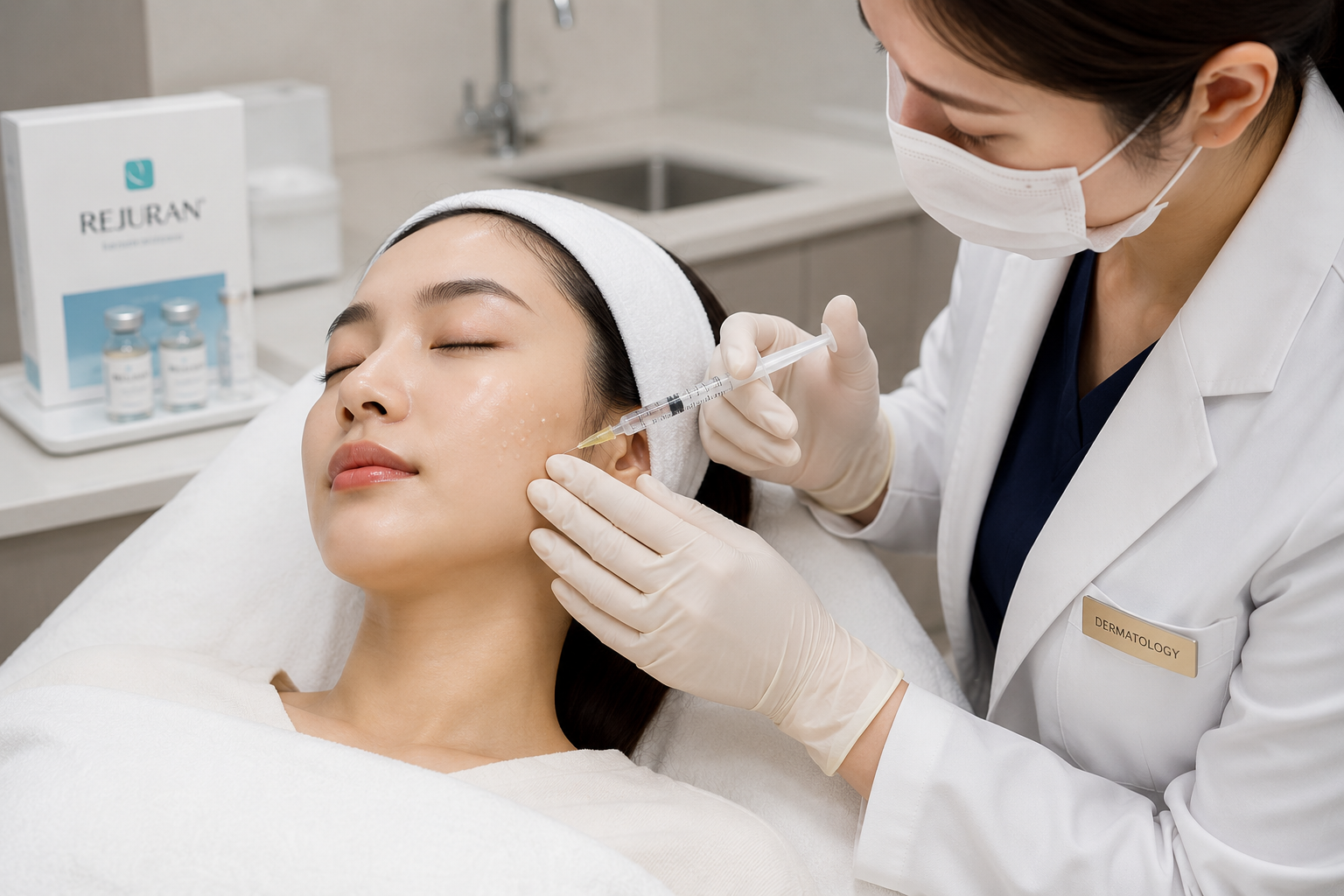
Rejuran has become one of Korea's most requested skin rejuvenation treatments. Many patients choose it to improve overall skin quality, support healing, and address concerns such as fine lines, rough texture, and reduced elasticity.
If you're considering Rejuran in Korea, this guide explains how the treatment works, who it may be suitable for, expected recovery, costs, risks, and how to choose a clinic.
What Is Rejuran?
Rejuran is an injectable skin rejuvenation treatment made from highly purified polynucleotides (PN), which are DNA fragments derived from salmon.
Unlike dermal fillers that primarily add volume, Rejuran is generally used to improve skin quality. The treatment is often chosen by patients looking for healthier-looking skin, improved texture, and enhanced skin recovery.
Because of its focus on skin regeneration rather than volume enhancement, Rejuran is sometimes referred to as a "skin booster."
How Does Rejuran Work?
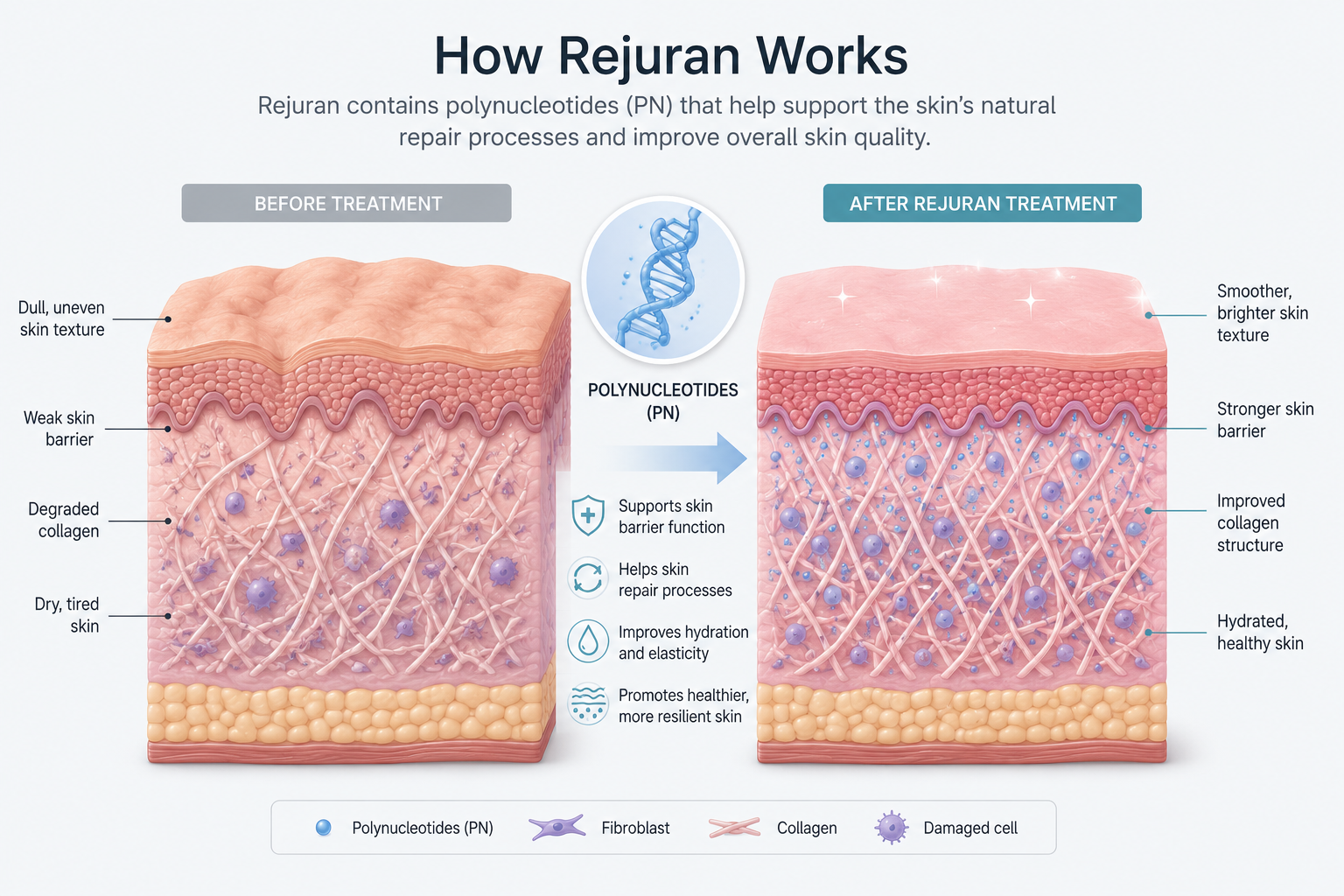
Polynucleotides are believed to support the skin's natural repair processes.
After injection, Rejuran may help:
- Improve skin texture
- Support skin elasticity
- Improve hydration
- Reduce the appearance of fine lines
- Promote healthier-looking skin over time
Results develop gradually and often require multiple sessions.
Who Is Rejuran Suitable For?
Rejuran may be considered by patients who want to address:
- Fine lines
- Early signs of aging
- Dull skin
- Uneven texture
- Mild acne scars
- Reduced elasticity
- Overall skin quality concerns
It is often selected by patients who prefer a natural-looking improvement rather than dramatic volume changes.
Common Rejuran Treatment Areas
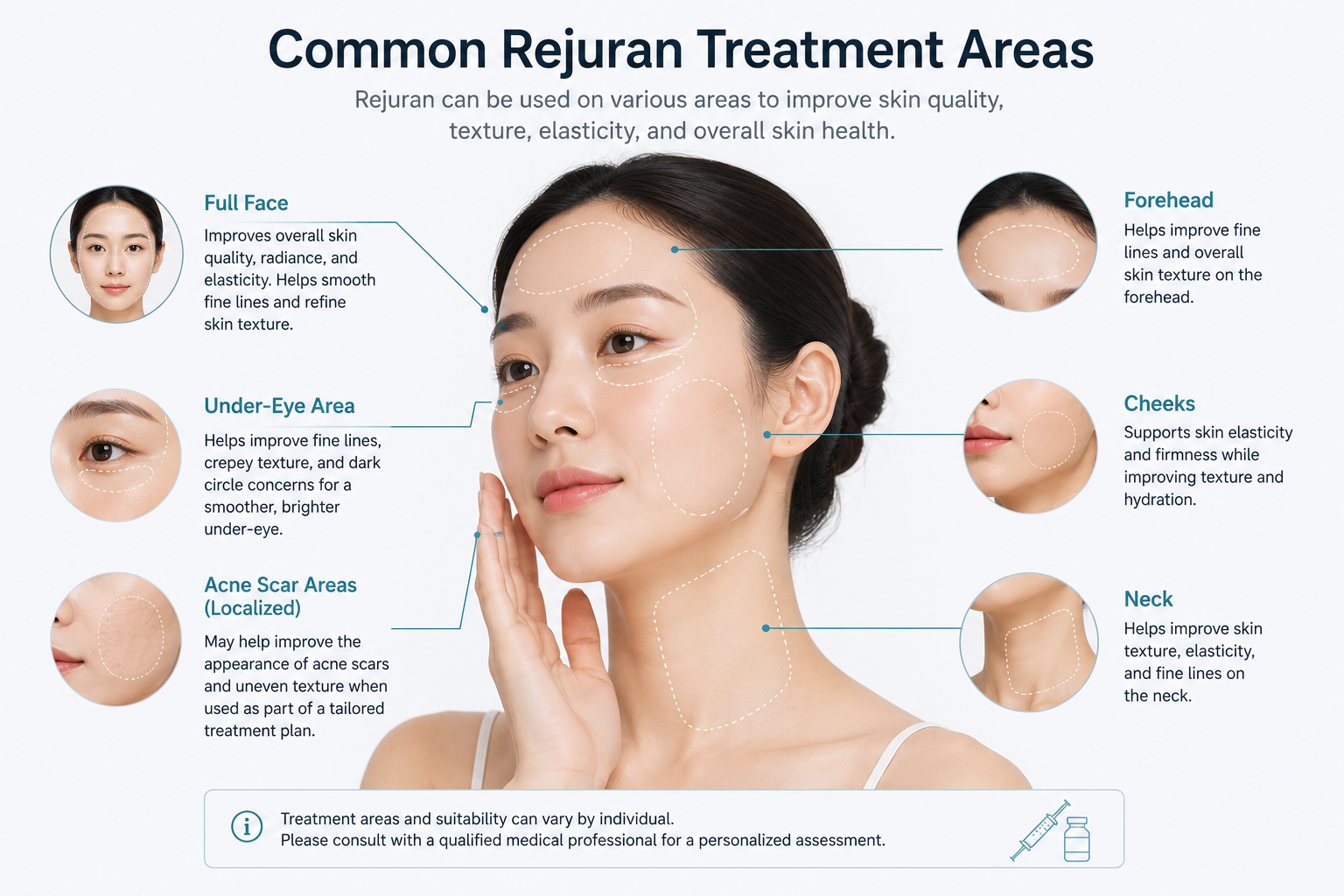
Face
The full face is the most common treatment area, particularly for improving overall skin quality.
Under-Eye Area
Specialized formulations may be used around the eyes to address fine lines and crepey skin.
Neck
Some clinics offer Rejuran treatments for neck rejuvenation and texture improvement.
Acne Scar Areas
Rejuran may be incorporated into broader acne scar treatment plans.
Types of Rejuran Available in Korea
Rejuran Healer
The standard formulation used for overall skin rejuvenation.
Rejuran i
Designed for delicate areas around the eyes.
Rejuran HB
Combines polynucleotides with hyaluronic acid for additional hydration.
Rejuran S
Often used for localized scar concerns.
Not every clinic offers every formulation, so patients should confirm availability before booking.
How Many Sessions Are Usually Recommended?
Treatment plans vary between clinics and patients.
Many providers recommend:
- Initial series of 3–4 sessions
- Sessions spaced several weeks apart
- Maintenance treatments thereafter if desired
The appropriate treatment plan should be determined by a qualified medical professional.
What Is Recovery Like?
Recovery is generally mild compared with more invasive procedures.
Patients commonly experience:
- Small injection bumps
- Redness
- Mild swelling
- Bruising
Injection marks are often most visible during the first 24–48 hours.
Most patients can return to normal daily activities relatively quickly, although visible signs may persist for several days.
Rejuran Cost in Korea
Prices vary depending on:
- Clinic location
- Practitioner experience
- Product quantity used
- Treatment area
- Whether combination treatments are included
As a general guideline, Rejuran treatments in Korea commonly range from approximately:
300,000–800,000 KRW per session
Premium clinics and specialized protocols may exceed this range.
Patients should always verify:
- Product authenticity
- Quantity used
- Whether consultation fees are included
- Any additional treatment charges
Rejuran vs Skin Boosters
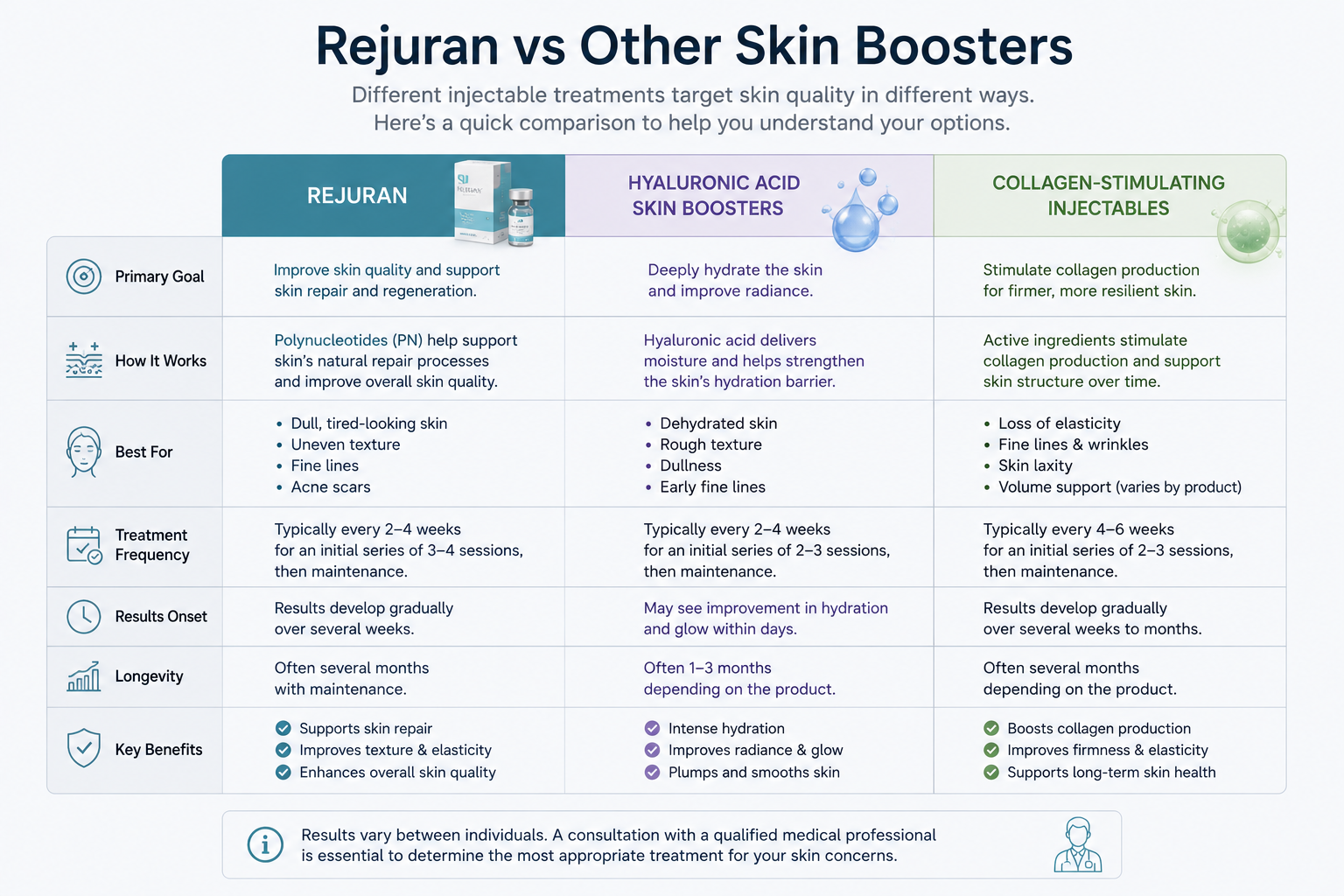
Patients often compare Rejuran with other injectable skin treatments.
Rejuran
Best known for:
- Skin quality improvement
- Tissue repair support
- Gradual rejuvenation
Hyaluronic Acid Skin Boosters
Often selected for:
- Hydration
- Skin glow
- Improved moisture retention
Collagen-Stimulating Injectables
Commonly chosen for:
- Longer-term collagen support
- Texture improvement
The most appropriate treatment depends on individual goals and clinical assessment.
Potential Risks and Side Effects
Like any injectable treatment, Rejuran carries risks.
Possible side effects include:
- Redness
- Swelling
- Bruising
- Tenderness
- Temporary bumps at injection sites
Although uncommon, more serious complications can occur with injectable procedures.
Patients should discuss risks, benefits, and alternatives with their provider before treatment.
How to Choose a Rejuran Clinic in Korea
When comparing clinics, consider:
Medical Consultation Quality
Look for clinics that explain:
- Treatment goals
- Expected outcomes
- Recovery expectations
- Potential risks
Product Authenticity
Ask whether genuine Rejuran products are used.
Experience With International Patients
International-friendly clinics often provide:
- English-speaking coordinators
- Transparent pricing
- Post-treatment support
Treatment Planning
Be cautious of clinics that recommend treatments without understanding your goals and concerns.
Questions to Ask Before Booking
- Which Rejuran product will be used?
- How many sessions are recommended?
- What results are realistic?
- What recovery should I expect?
- What are the total costs?
- Are there alternative treatments that may better fit my goals?
Final Thoughts
Rejuran remains one of Korea's most popular skin rejuvenation treatments because it focuses on improving overall skin quality rather than creating dramatic changes.
For many patients, it may help improve texture, hydration, and signs of aging when performed as part of an appropriate treatment plan. Results vary between individuals, and choosing a qualified clinic is an important part of the decision-making process.