

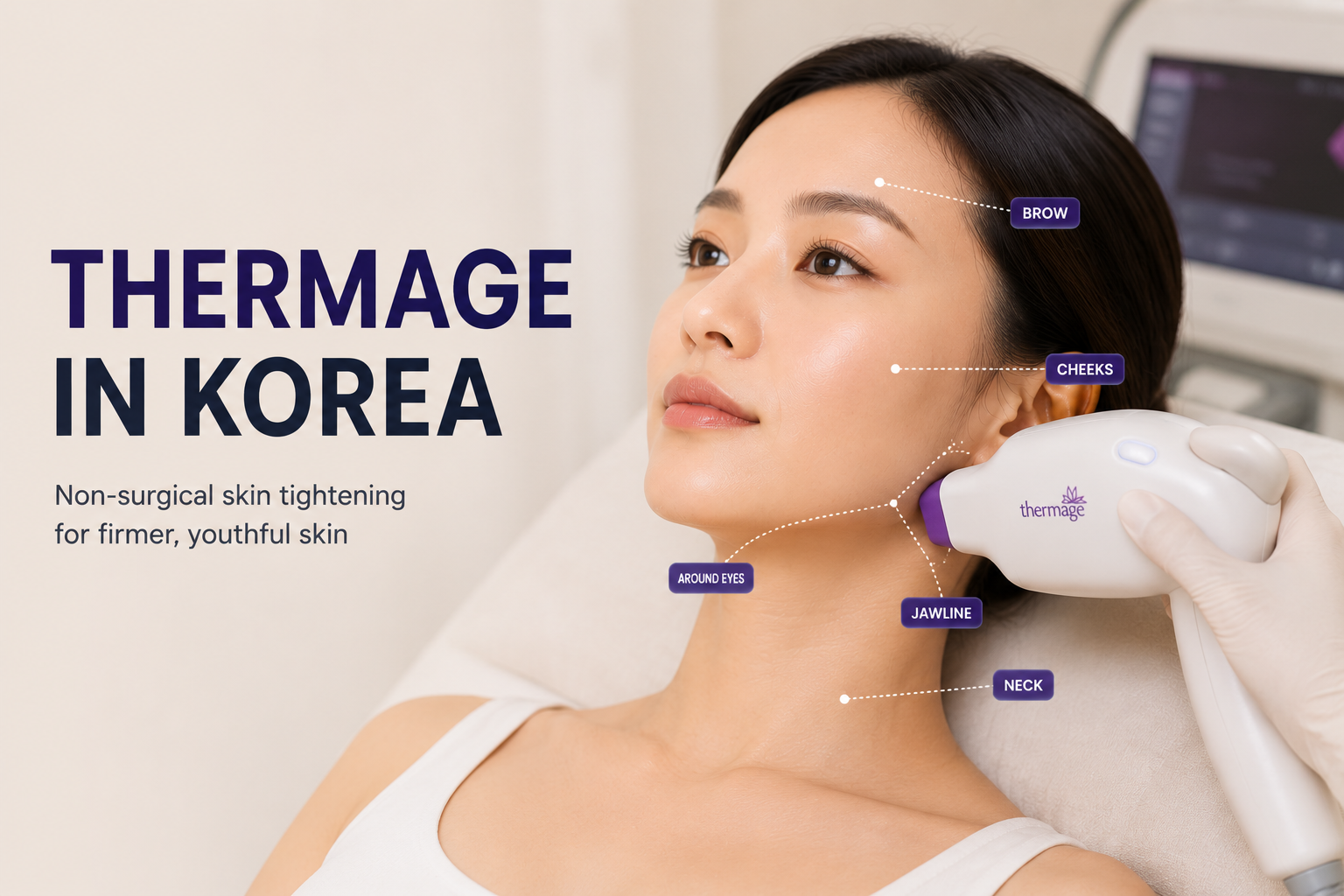
Thermage is one of the most widely known non-surgical skin tightening treatments available in Korea.
Many patients choose Thermage when they want to improve skin firmness, address mild skin laxity, and support collagen production without surgery or significant downtime. The treatment is commonly used on the face, jawline, neck, and around the eyes.
Because Korea offers a wide range of energy-based aesthetic treatments, international patients often compare Thermage with options such as Ultherapy, RF microneedling, and other skin tightening procedures.
This guide explains how Thermage works, who may be a candidate, expected recovery, costs, and factors to consider when choosing a clinic in Korea.
What Is Thermage?
Thermage is a non-invasive treatment that uses radiofrequency (RF) energy to heat deeper layers of the skin.
The treatment is designed to stimulate collagen production and support skin tightening over time. Unlike surgical procedures, Thermage does not involve incisions or significant downtime.
Thermage is commonly used for:
- Mild skin laxity
- Facial skin tightening
- Jawline definition
- Neck rejuvenation
- Skin texture improvement
- Around-eye treatment
Many patients choose Thermage as part of an overall skin rejuvenation plan.
How Does Thermage Work?
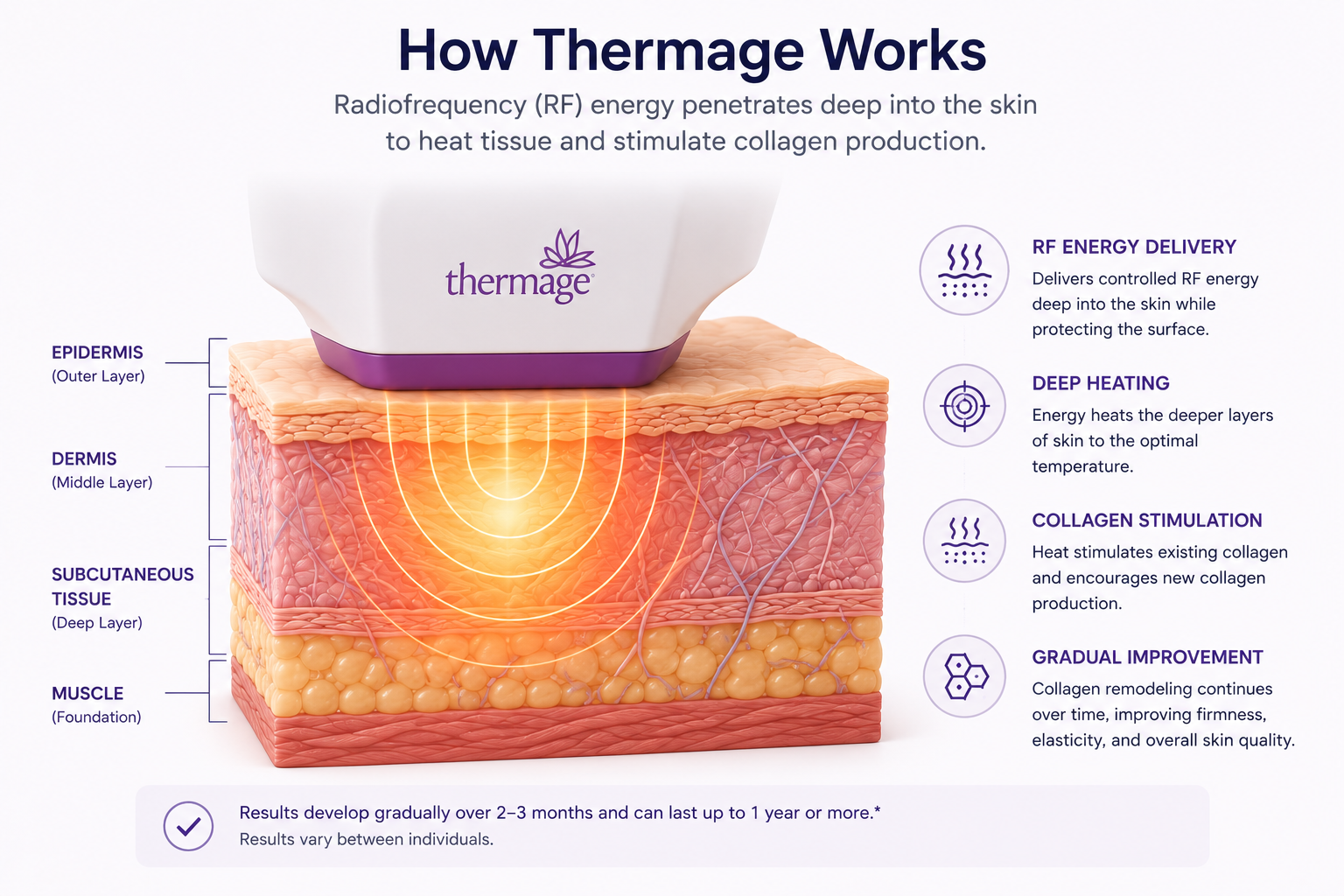
Thermage delivers controlled radiofrequency energy into the skin while simultaneously cooling the skin surface.
The treatment creates heat within deeper layers of tissue, which may help stimulate the body's natural collagen remodeling process.
Over time, this collagen remodeling may contribute to improvements in:
- Skin firmness
- Skin elasticity
- Facial contours
- Overall skin texture
Because collagen production develops gradually, results typically appear over the weeks and months following treatment.
Results vary between individuals.
What Areas Can Be Treated?
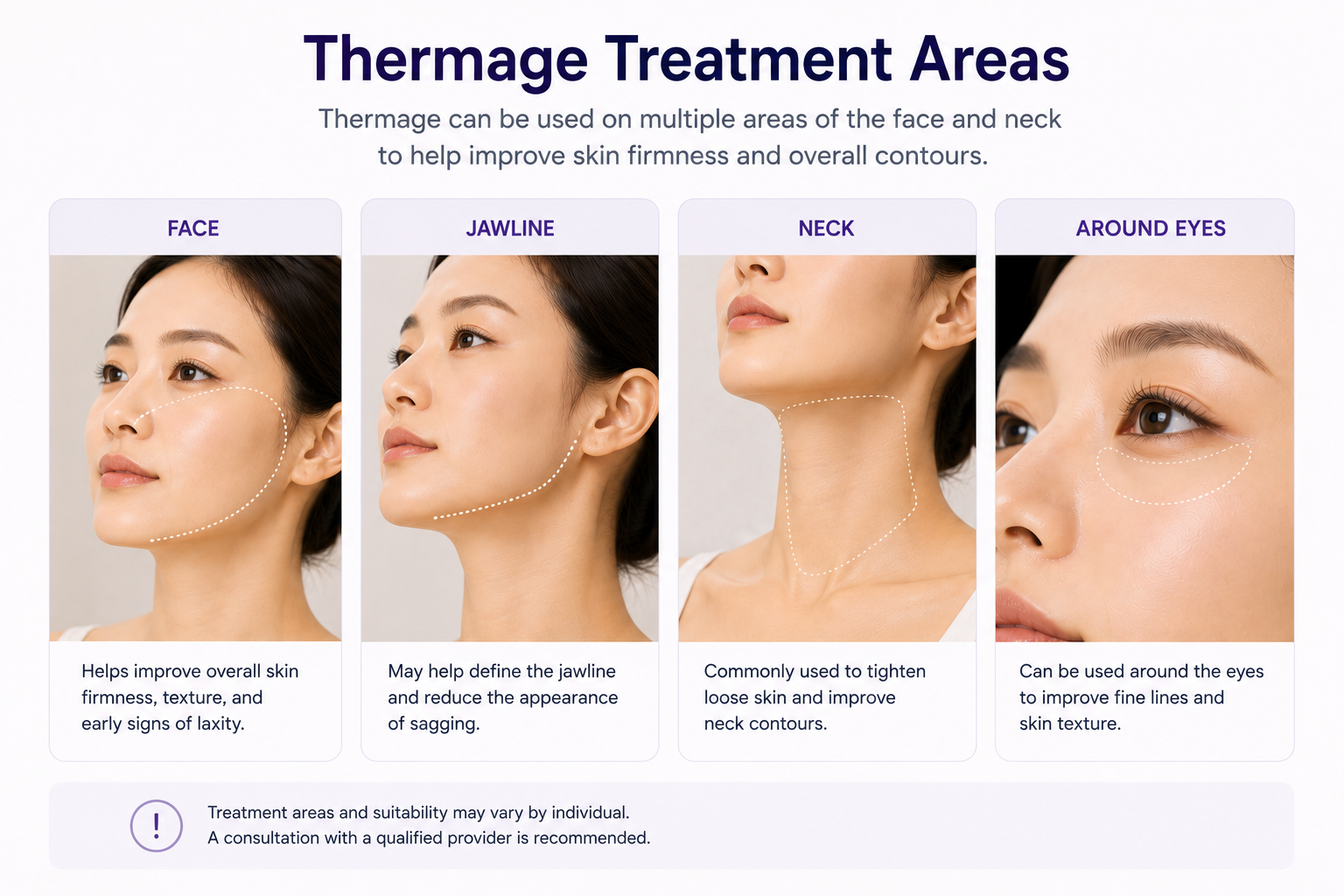
Thermage can be performed on multiple areas of the face and body.
Face
Many patients seek Thermage to improve overall skin firmness and reduce mild skin laxity.
Jawline
Thermage is commonly used to improve jawline definition and address early signs of sagging.
Neck
The neck is one of the most frequently treated areas, particularly among patients concerned about loose or crepey skin.
Around the Eyes
Thermage has long been known for its use around the eye area, where patients may seek subtle tightening and rejuvenation.
Body Areas
Some clinics also use Thermage on selected body areas, depending on individual concerns and treatment goals.
Who May Consider Thermage?
Thermage is often considered by patients who:
- Notice early signs of skin laxity
- Want non-surgical skin tightening
- Prefer minimal downtime
- Are seeking gradual improvements
- Have realistic expectations
Thermage is generally not intended to replace surgical lifting procedures in patients with significant skin laxity.
A consultation is necessary to determine whether the treatment aligns with your goals.
What Happens During Treatment?
A typical Thermage appointment usually includes:
- Consultation and treatment planning
- Skin preparation
- Energy delivery to the treatment area
- Post-treatment assessment
- Aftercare instructions
Treatment duration varies depending on the area being treated.
Many sessions take between 30 and 90 minutes.
Does Thermage Hurt?
Patient experiences vary.
Many people describe sensations such as:
- Brief heat
- Pressure
- Temporary discomfort during energy delivery
The experience depends on factors such as:
- Treatment area
- Energy settings
- Individual pain tolerance
Clinics may use different approaches to improve comfort during treatment.
Recovery and Downtime
One reason Thermage remains popular is that recovery is typically limited.
Patients may experience:
- Mild redness
- Temporary swelling
- Warmth
- Sensitivity
These effects are generally temporary.
Many patients return to normal activities shortly after treatment.
Recovery experiences vary between individuals.
When Will I See Results?
Thermage results are usually gradual rather than immediate.
Many patients notice changes developing over the following weeks and months as collagen remodeling occurs.
The extent of improvement depends on factors such as:
- Age
- Skin quality
- Degree of laxity
- Individual collagen response
A qualified provider can help establish realistic expectations based on your individual circumstances.
How Much Does Thermage Cost in Korea?
Pricing varies considerably between clinics.
Factors influencing cost include:
- Treatment area
- Number of shots
- Provider experience
- Clinic location
- Package offerings
When comparing clinics, consider asking:
- How many shots are included?
- Which treatment areas are covered?
- Is follow-up assessment included?
- Are additional sessions recommended?
Understanding the full treatment plan is often more useful than comparing prices alone.
Thermage vs Ultherapy: What's the Difference?
Thermage and Ultherapy are often compared because both are used for non-surgical skin tightening.
However, they use different technologies.
Thermage
- Uses radiofrequency energy
- Often chosen for overall skin tightening and texture improvement
- Commonly used on the face, neck, and around the eyes
Ultherapy
- Uses microfocused ultrasound energy
- Targets deeper structural tissue layers
- Often chosen for lifting and contouring concerns
The most suitable treatment depends on your goals, skin condition, and provider recommendations.
If you're deciding between the two, see our detailed guide to Ultherapy vs Thermage.
How to Choose a Thermage Clinic in Korea
Verify Device Authenticity
Patients should confirm that the clinic uses authentic Thermage equipment and approved treatment protocols.
Understand Shot Counts
Thermage pricing is often based on the number of shots delivered.
Understanding shot counts can help make clinic comparisons more meaningful.
Ask About Treatment Planning
A personalized treatment plan should take into account:
- Facial anatomy
- Skin laxity
- Treatment goals
- Previous aesthetic treatments
International Patient Support
International visitors may benefit from clinics offering:
- English-language consultations
- Translation assistance
- Clear aftercare guidance
Potential Risks and Side Effects
Like all aesthetic procedures, Thermage carries potential risks and side effects.
Possible side effects may include:
- Redness
- Swelling
- Tenderness
- Temporary sensitivity
- Temporary discomfort
Patients should discuss risks, benefits, and alternatives with a qualified medical professional before proceeding.
Final Thoughts
Thermage remains one of the most popular non-surgical skin tightening treatments in Korea.
Many patients choose it because it may help improve skin firmness and support collagen production while requiring minimal downtime.
Before booking treatment, compare clinics carefully, understand the number of shots included, and discuss realistic expectations during consultation.
Well-informed patients are better positioned to choose treatments that align with their goals.