

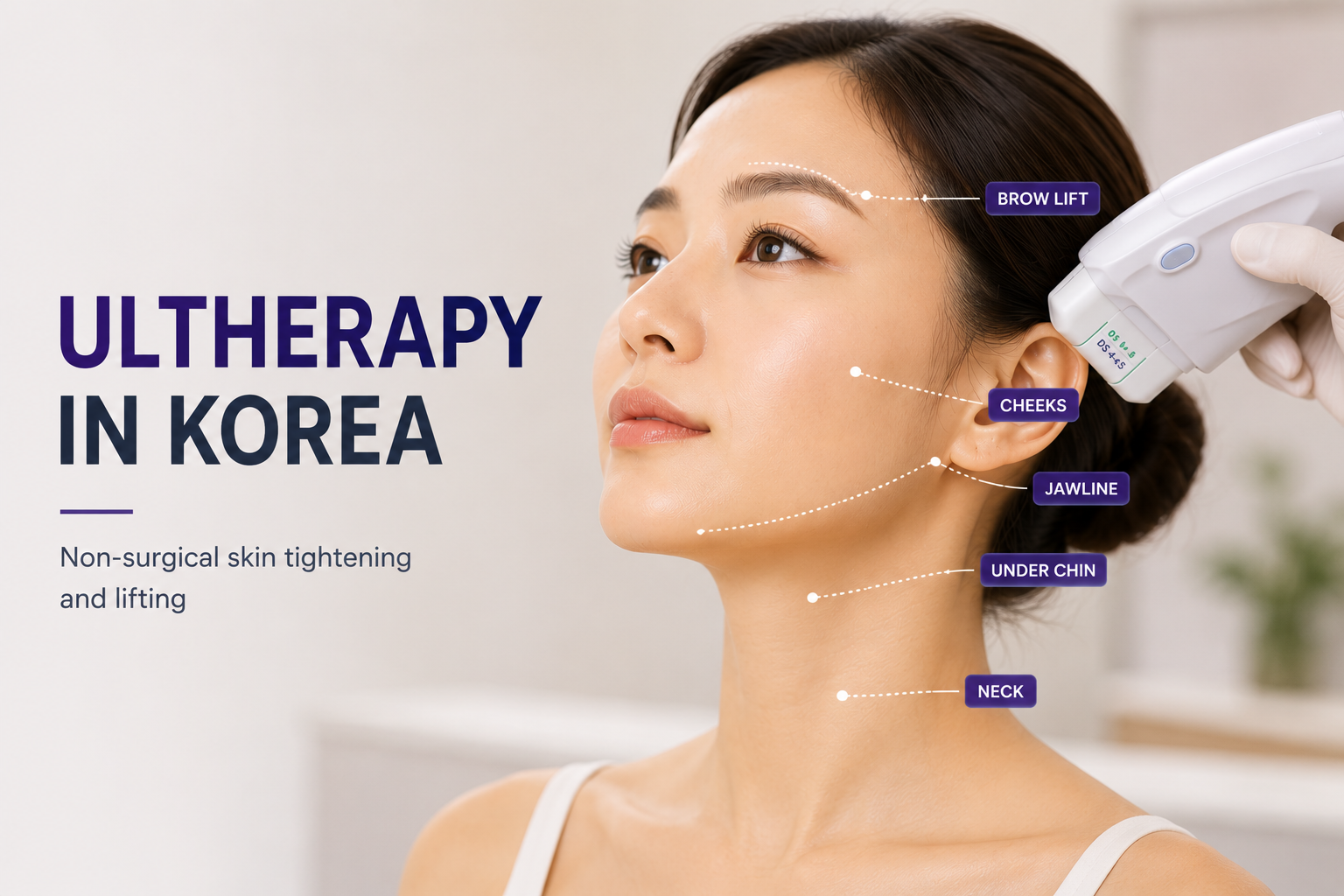
Ultherapy is one of the most widely recognized non-surgical skin tightening treatments available in Korea.
Many patients consider Ultherapy when they want to address mild to moderate skin laxity without undergoing surgery. The treatment is commonly used for lifting and tightening areas such as the jawline, cheeks, neck, and brow.
Because Korea is home to a large number of aesthetic clinics offering energy-based treatments, international patients often compare Ultherapy with alternatives such as Thermage, RF microneedling, and other skin tightening procedures.
This guide explains how Ultherapy works, who may be a candidate, expected recovery, costs, and factors to consider when choosing a clinic in Korea.
What Is Ultherapy?
Ultherapy is a non-invasive treatment that uses microfocused ultrasound energy to target deeper layers of tissue beneath the skin.
Unlike many treatments that focus primarily on the skin surface, Ultherapy delivers energy to deeper structural layers while leaving the outer skin intact.
The treatment is commonly used for:
- Mild to moderate skin laxity
- Jawline definition
- Lower face lifting
- Neck tightening
- Brow lifting
- Overall skin firming
Many patients choose Ultherapy because it does not require surgery or extensive downtime.
How Does Ultherapy Work?
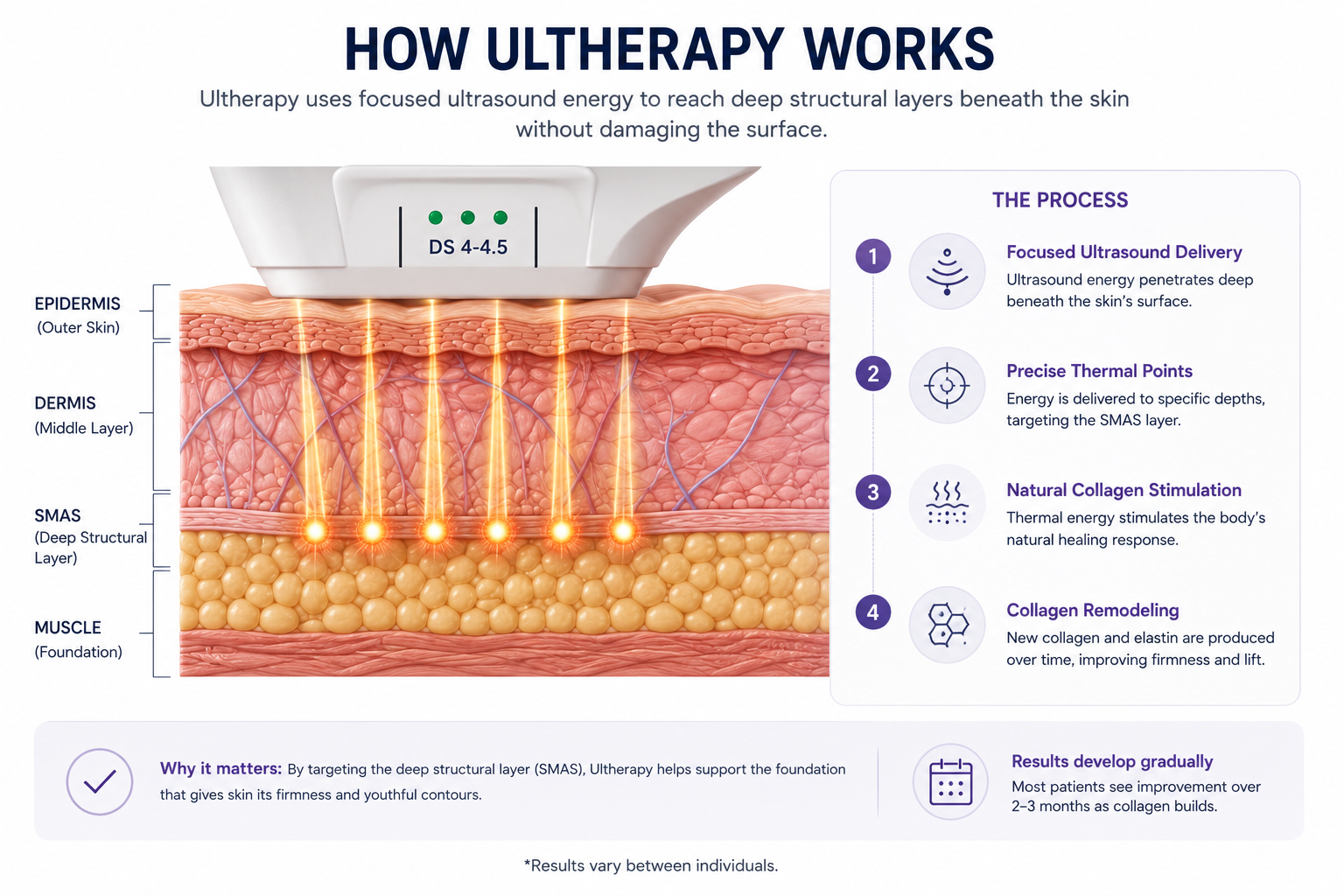
Ultherapy uses focused ultrasound energy to create precise thermal points beneath the skin.
These treatment points are intended to stimulate the body's natural collagen production process.
Over time, newly formed collagen may help improve:
- Skin firmness
- Skin elasticity
- Facial contours
- Mild sagging
Because collagen remodeling occurs gradually, improvements typically develop over several weeks to months.
Results vary between individuals.
What Areas Can Be Treated?
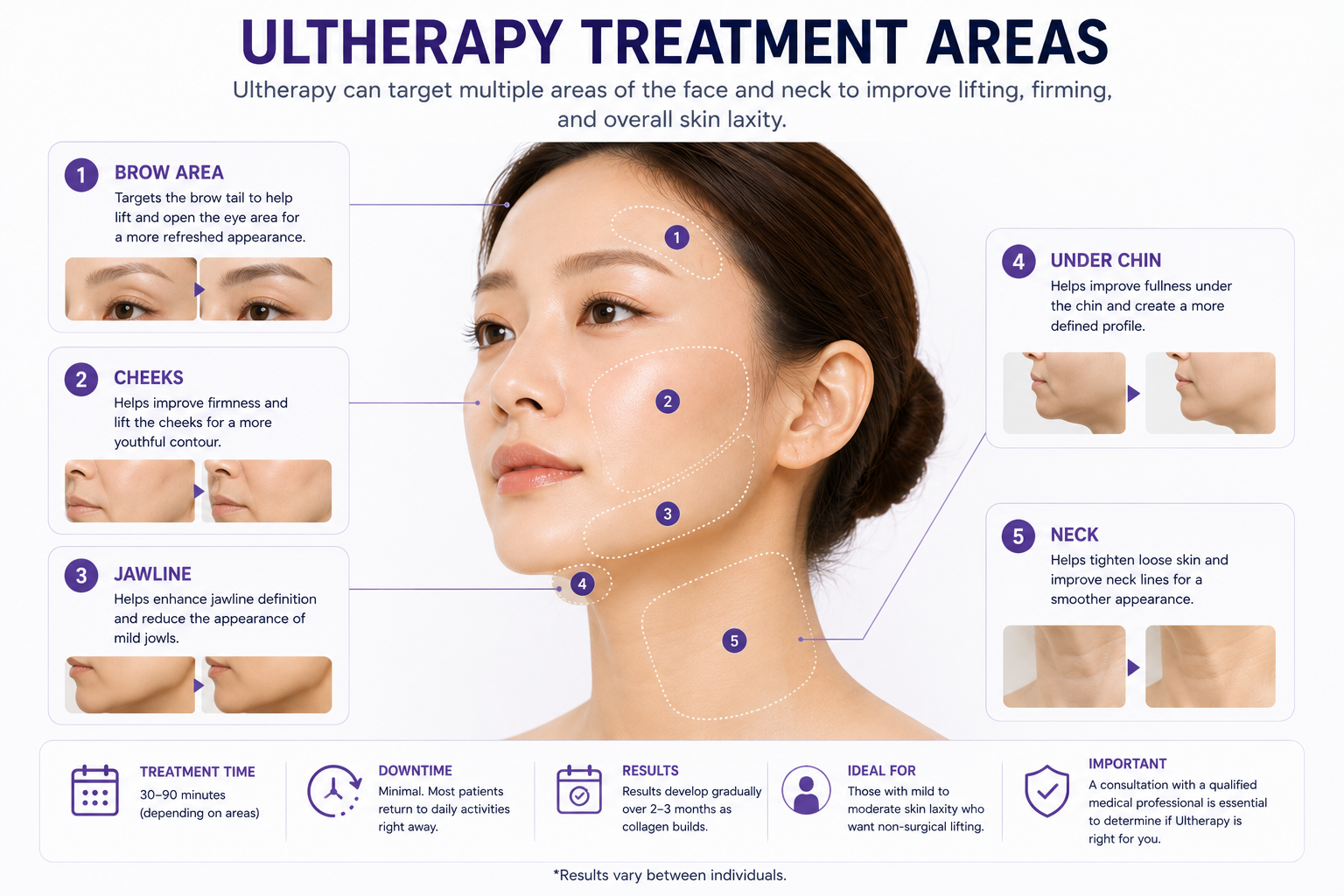
Ultherapy is commonly performed on:
Lower Face and Jawline
Many patients seek treatment to improve jawline definition and reduce the appearance of mild jowling.
Cheeks
Ultherapy may help improve overall facial firmness and contour.
Neck
The neck is one of the most frequently treated areas, especially among patients concerned about skin laxity.
Brow Area
Some patients choose Ultherapy for a subtle lifting effect around the eyebrows.
Under Chin Area
Treatment may be used to improve definition beneath the chin.
Who May Be a Candidate for Ultherapy?
Ultherapy is often considered by patients who:
- Notice early signs of skin laxity
- Want non-surgical skin tightening
- Prefer minimal downtime
- Have realistic expectations regarding outcomes
It is generally not intended to replace surgical lifting procedures in patients with significant skin laxity.
A consultation is necessary to determine whether the treatment is appropriate for your goals.
What Happens During Treatment?
A typical Ultherapy session usually involves:
- Consultation and assessment
- Skin marking and treatment planning
- Ultrasound visualization
- Energy delivery to selected treatment areas
- Post-treatment instructions
Treatment times vary depending on the areas being treated.
Many sessions take between 30 and 90 minutes.
Does Ultherapy Hurt?
Comfort levels vary between individuals.
Patients commonly describe sensations such as:
- Warmth
- Tingling
- Brief discomfort during energy delivery
The experience varies depending on:
- Treatment area
- Energy settings
- Individual pain tolerance
Clinics may use different comfort-management approaches based on their treatment protocols.
Recovery and Downtime
One reason Ultherapy remains popular is that downtime is typically limited.
Patients may experience:
- Mild redness
- Temporary swelling
- Tenderness
- Sensitivity
These effects are usually temporary.
Many patients return to normal activities shortly after treatment, although recovery experiences differ.
When Will I See Results?
Ultherapy does not usually produce immediate lifting results.
Instead, improvements generally occur gradually as collagen remodeling develops.
Many patients notice changes over the following weeks and months.
The extent of improvement varies depending on factors such as:
- Age
- Skin quality
- Degree of laxity
- Individual collagen response
How Much Does Ultherapy Cost in Korea?
Pricing varies considerably between clinics.
Factors influencing cost include:
- Number of treatment lines
- Treatment area
- Provider experience
- Clinic location
- Package offerings
When comparing clinics, patients should ask:
- How many lines are included?
- Which areas will be treated?
- Is follow-up assessment included?
- Are additional treatments recommended?
Understanding the treatment plan is often more useful than comparing price alone.
Ultherapy vs Other Skin Tightening Treatments
International patients frequently compare Ultherapy with other energy-based treatments.
Common alternatives include:
- Thermage
- RF microneedling
- HIFU-based treatments
- Combination treatment plans
The most suitable treatment depends on:
- Skin concerns
- Treatment goals
- Budget
- Provider recommendations
For a detailed comparison, see our guide to Ultherapy vs Thermage.
How to Choose an Ultherapy Clinic in Korea
Verify Device Authenticity
Patients should confirm that the clinic uses authentic Ultherapy equipment and protocols.
Ask About Treatment Planning
A personalized treatment plan should consider:
- Facial anatomy
- Degree of laxity
- Treatment goals
Understand Treatment Lines
Ultherapy pricing is often based on treatment lines.
Understanding the number of lines included can help patients compare clinics more accurately.
International Patient Support
International visitors may benefit from clinics offering:
- English-language consultations
- Translation assistance
- Clear aftercare instructions
Potential Risks and Side Effects
Like all aesthetic procedures, Ultherapy carries potential risks and side effects.
Possible effects may include:
- Redness
- Swelling
- Tenderness
- Temporary numbness
- Temporary discomfort
Patients should discuss risks, benefits, and alternatives with a qualified medical professional before proceeding.
Final Thoughts
Ultherapy remains one of the most popular non-surgical skin tightening treatments in Korea.
Many patients choose it because it targets deeper tissue layers while requiring little downtime compared with surgical procedures.
Before booking treatment, compare clinics carefully, understand the number of treatment lines included, and discuss realistic expectations during consultation.
Well-informed patients are better positioned to choose treatments that align with their goals.